
Creatine occupies an unusual position in the nutritional literature for active men. Among the most extensively documented nutrients in exercise science writing, it generates both unusually specific claims and unusually consistent editorial agreement. This piece surveys that literature from an independent editorial standpoint — not to endorse a specific supplementation approach, but to document what the published record actually contains.
The Research Landscape
Few nutrients in the exercise nutrition space carry the volume of published research that creatine does. Its presence in peer-reviewed journals spans several decades, with consistent output across exercise physiology, sports nutrition, and general nutritional science publications. The editorial review for this article covered sources published between 2000 and 2026, with a focus on reviews and meta-analyses rather than individual small-sample studies.
The central finding across this literature is consistent: creatine supports physical output over time in resistance training contexts. The phrase "over time" matters here — the research consistently frames creatine's role as cumulative rather than immediate. It is not a pre-workout stimulus in the way caffeine functions; it is a nutrient that, when taken consistently over a period of weeks, is observed to contribute to improved physical output in subsequent training sessions.
This distinction has practical implications for how creatine is positioned in a men's supplement stack. It belongs in the category of foundational daily supplements rather than situational performance additions. The research supports daily consistency rather than episodic use.
What the Published Literature Observes
The research literature on creatine and physical output is extensive enough that it is more useful to describe categories of observation than to cite individual studies. Across the reviewed sources, the following patterns appear with high frequency:
- Resistance training output: Multiple reviews document consistent associations between daily creatine supplementation and improved output in compound resistance training movements. The association is stronger in high-intensity, short-duration efforts than in sustained endurance contexts.
- Consistency of intake: The research emphasises regular daily intake across a sustained period rather than "loading" approaches. Several more recent reviews suggest that a consistent daily amount produces comparable outcomes to front-loaded protocols without the short-term digestive adjustment some users report.
- Individual variation: The literature consistently acknowledges wide variation in individual response. Some men observe more pronounced effects; others note minimal perceptible change despite consistent intake. This variation is documented and not adequately explained by existing research at the time of this review's composition.
- Hydration context: A consistent editorial note across sources is the importance of adequate hydration during creatine supplementation periods. The nutrient is associated with increased intracellular water retention in muscle tissue, which has implications for daily fluid intake patterns.
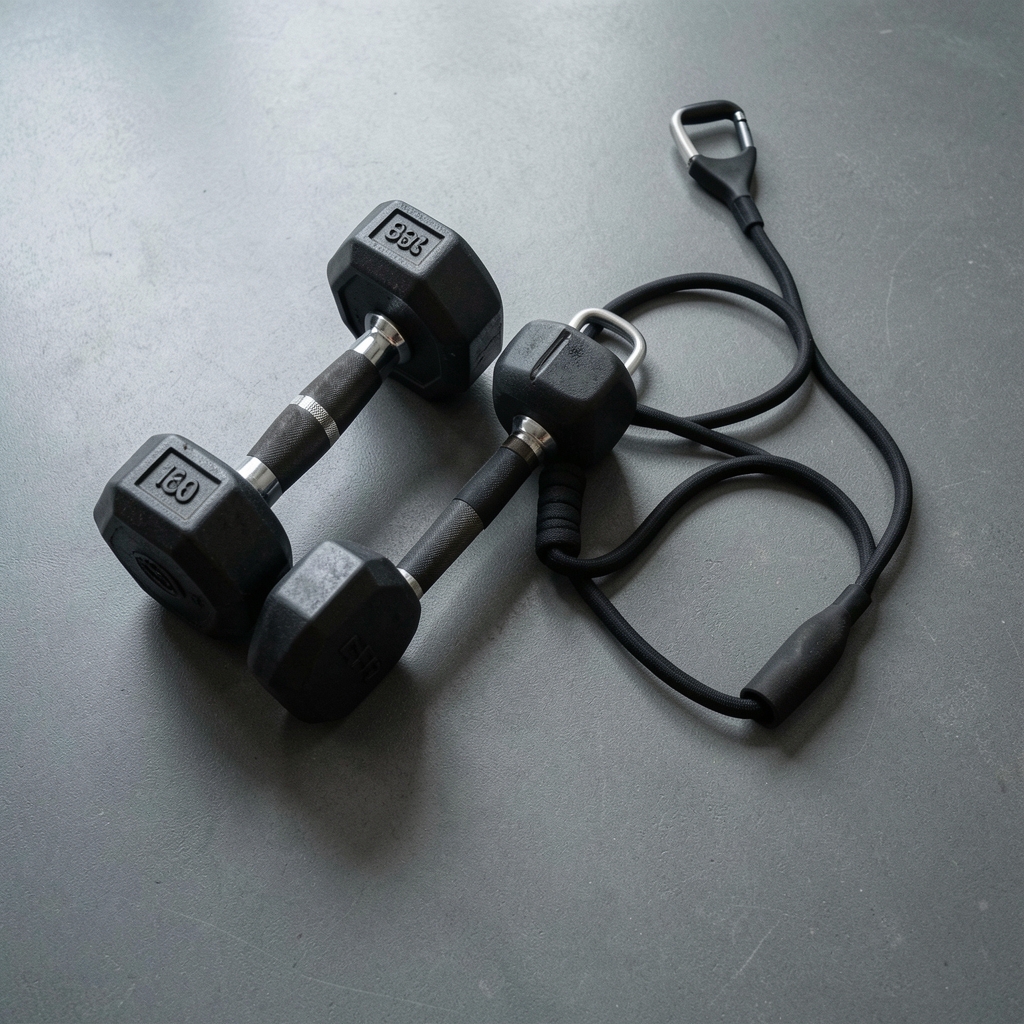
Resistance training context, editorial composition, 2026
Creatine in the Context of a Men's Daily Stack
From an editorial standpoint, creatine's position in a men's supplement stack is defined more by its role than by its timing. It is not a pre-workout compound. It is not a recovery nutrient in the way magnesium is typically described. It occupies a category of its own: a foundational nutrient that supports the physical output layer of training over weeks and months of consistent daily practice.
The practical question for men building a daily supplement stack is where creatine fits relative to other nutrients. Based on the research literature reviewed for this piece, the answer tends toward simplicity: take it at a consistent time each day, with food, alongside adequate water. The timing relative to training appears to matter less than the consistency of daily intake. Morning inclusion in the stack is the most common approach documented across the reviewed sources.
The stacking interaction question — how creatine interacts with other common supplements like protein powder, vitamin D, magnesium, and B vitamins — is addressed in the research with notable brevity. No significant adverse interactions are documented. The reviewed literature does not identify any pattern of concern with standard multi-supplement approaches.
"Creatine's value in the research record is not as an accelerant but as a foundation — a nutrient whose role is most clearly observed when it has been present consistently for long enough to be measured."
Protein and Creatine: The Relationship in Published Research
One frequently encountered pairing in the exercise nutrition literature is creatine alongside adequate dietary protein intake. The research does not frame this as a synergistic interaction in the biochemical sense; rather, it reflects the practical observation that men who meet their daily protein targets tend to show more consistent response to creatine supplementation in the reviewed studies. This may reflect a confounding factor — men with structured nutritional habits are more likely to supplement consistently — rather than a direct mechanistic relationship.
The implication for editorial guidance is the one that appears most frequently across the reviewed literature: whole food protein should precede and underpin any supplement consideration. Protein powder, creatine, and other supplements are additions to a nutritional foundation, not substitutes for it. This positioning appears in nearly every reviewed source and is worth preserving in any editorial discussion of men's supplement stacking habits.
Limitations of the Research Record
An honest editorial review of creatine literature must also note its limitations. The majority of published studies use relatively short observation windows — eight to twelve weeks — which means the long-term picture across years of consistent supplementation is less clearly documented. Most studies use male participants, which is editorially relevant for this journal's focus but limits the generalisability of findings to other populations. And the field suffers from the standard challenge of nutritional research: isolating the effect of a single nutrient in the context of a complex, variable daily diet is methodologically difficult.
These limitations do not diminish the value of the existing research record. They contextualise it. Creatine is among the most rigorously studied nutrients in exercise nutrition, and the research that exists is remarkably consistent. The limitations are structural to the field, not specific failures of creatine research.
An Editorial Position
The position of Alerov Journal, following this review, is that creatine is an editorially appropriate subject for a men's supplement publication. The research record supporting its place in a resistance-training-focused daily stack is substantive and independently reproducible. It does not overstate its role as anything beyond physical output support over time. And it represents the kind of nutrient that fits the journal's focus on foundational, evidence-informed daily habits rather than performance-maximisation approaches.
Articles published on Alerov Journal are editorial in nature and reflect the writers' observations on everyday supplementation habits and nutritional awareness for active men. The content is not intended as professional advice. Readers with specific concerns about their daily routines are encouraged to speak with a qualified wellness professional. We recommend speaking with a qualified wellness or nutrition professional before introducing any new habit or routine to your daily life, particularly if you have specific dietary requirements.